

Nutritional approaches to counter performance constraints in high level sports competition
(Ernährungsansätze zur Abwehr von Leistungseinbußen bei Wettkämpfen im Hochleistungssport)
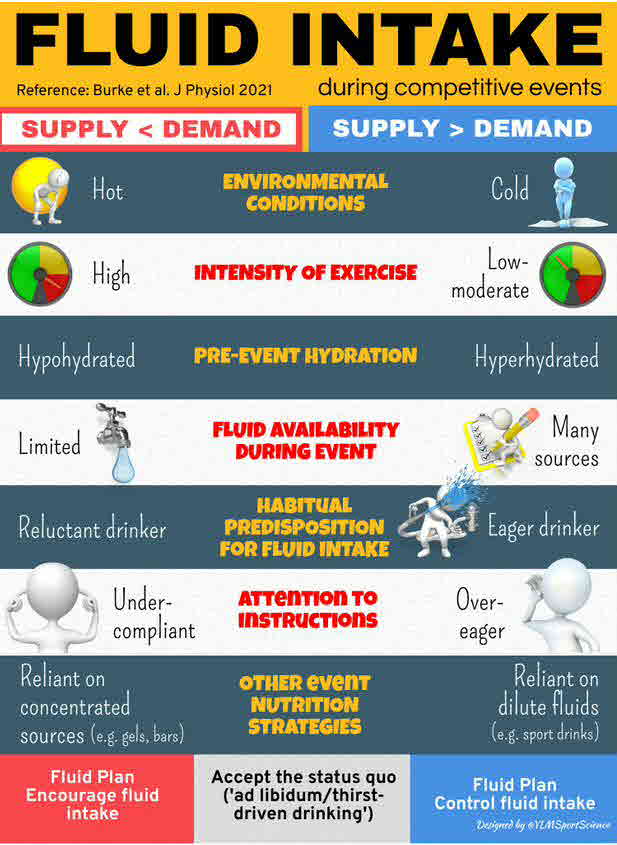
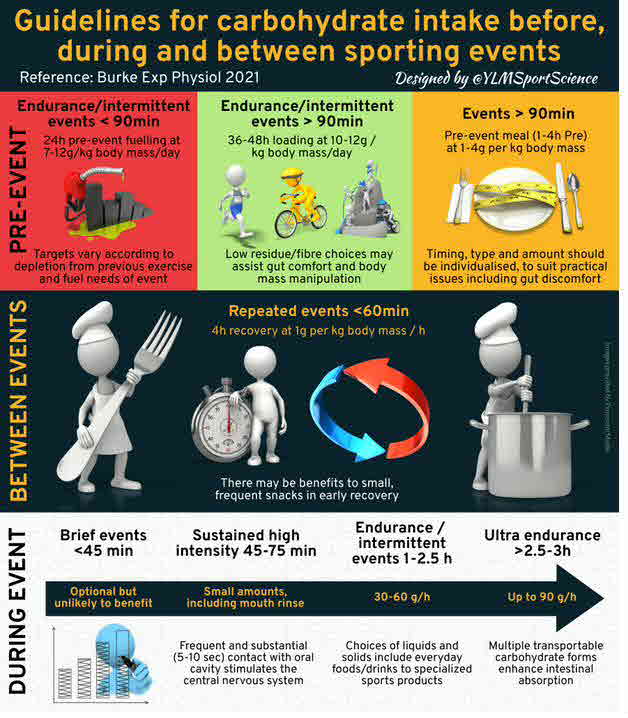
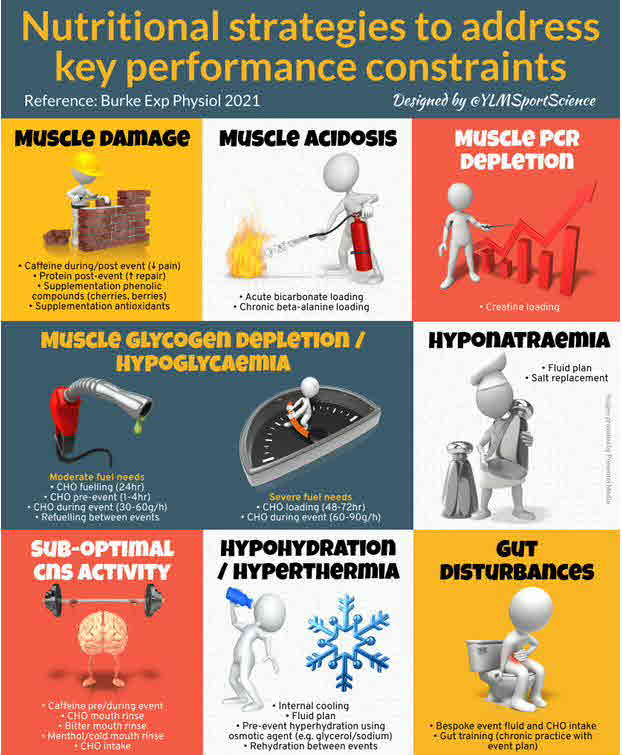
© Copyright 2021 YLMSportScience. Alle Rechte vorbehalten.
New Findings
What is the central question of this study?
What are the nutritional strategies that athletes use during competition events to optimise performance and why do they use them?
What is the main finding and its importance?
A range of nutritional strategies can be used by competitive athletes, alone or in combination, to address various event-specific factors that constrain event performance. Evidence for such practices is constantly evolving but must be combined with understanding of the complexities of real-life sport for optimal implementation.
High performance athletes share a common goal despite the unique nature of their sport: to pace or manage their performance to achieve the highest sustainable outputs over the duration of the event. Periodic or sustained decline in the optimal performance of event tasks, involves an interplay between central and peripheral phenomena that can often be reduced or delayed in onset by nutritional strategies. Contemporary nutrition practices undertaken before, during, or between events include strategies to ensure the availability of limited muscle fuel stores. This includes creatine supplementation to increase muscle phosphocreatine content, and consideration of the type, amount and timing of dietary carbohydrate intake to optimise muscle and liver glycogen stores or to provide additional exogenous substrate. Although there is interest in ketogenic low-carbohydrate high-fat diets and exogenous ketone supplements to provide alternative fuels to spare muscle carbohydrate use, present evidence suggests a limited utility of these strategies. Mouth sensing of a range of food tastants (e.g. carbohydrate, quinine, menthol, caffeine, fluid, acetic acid) may provide a central nervous system derived boost to sports performance. Finally, despite decades of research on hypohydration and exercise capacity, there is still contention around its effect on sports performance and the best guidance around hydration for sporting events. A unifying model proposes that some scenarios require personalised fluid plans while others might be managed by an ad hoc approach (ad libitum or thirst-driven drinking) to fluid intake.
© Copyright 2021 Experimental Physiology. The Physiological Society. Alle Rechte vorbehalten.
| Schlagworte: | |
|---|---|
| Notationen: | Biowissenschaften und Sportmedizin |
| Tagging: | Ketogen Glykogen |
| Veröffentlicht in: | Experimental Physiology |
| Sprache: | Englisch |
| Veröffentlicht: |
2021
|
| Online-Zugang: | https://doi.org/10.1113/EP088188 |
| Jahrgang: | 106 |
| Heft: | 12 |
| Seiten: | 2304-2323 |
| Dokumentenarten: | Artikel |
| Level: | hoch |