

Hormonal contraceptive use, menstrual cycle characteristics and training/nutrition related profiles of elite, sub-elite and amateur athletes and exercisers: One size is unlikely to fit all
(Hormonelle Empfängnisverhütung, Menstruationszyklusmerkmale und trainings- und ernährungsbezogene Profile von Spitzen-, Sub-Elite- und Amateursportlern und -sportlerinnen: Eine Größe passt wahrscheinlich nicht für alle)
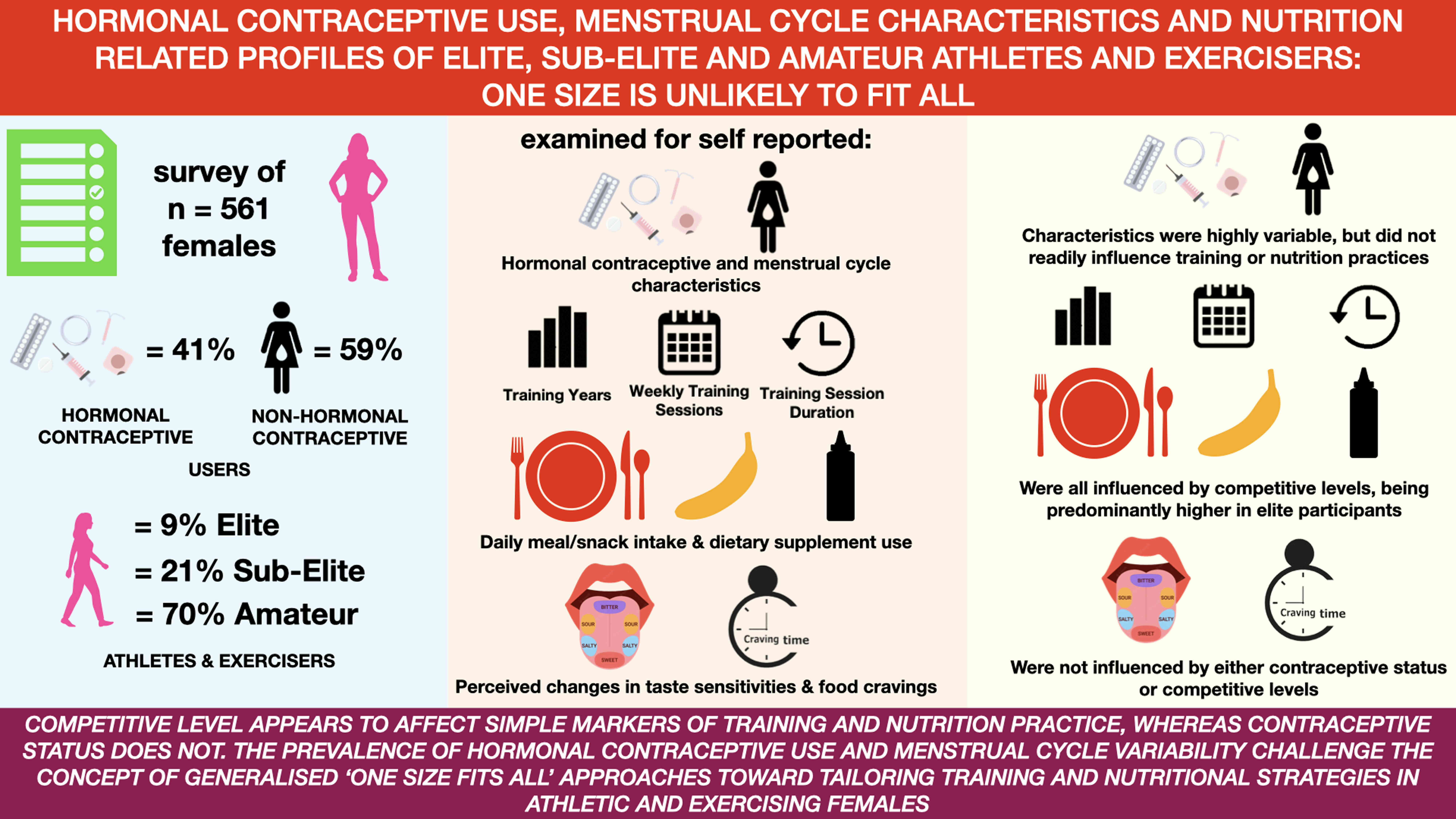
The aim of the present study was to simultaneously audit hormonal contraceptive (HC) use, menstrual cycle characteristics and training/nutrition related profiles in pre-menopausal women from varying athletic and exercise backgrounds. Elite (n = 51), sub-elite (n = 118) and amateur (n = 392) female athletes and exercisers were examined via an anonymous quantitative/qualitative survey tool. All analyses for ratio data were conducted utilising one- and two-way ANOVA/ANCOVA and odds ratio models, with ordinal data analysed via Pearson's Chi-squared tests. HC use was similar across elite, sub-elite and amateurs (34-44%). Menstrual cycle length was not different (P = 0.08) between competitive levels (28 ± 13 days), but 66% of respondents reported cycle variability (10 ± 11 days). Training profiles were not different based on contraceptive status (P > 0.05) yet were across competitive groups (P < 0.05). Daily meal/snack intakes were not different between contraceptive status (P > 0.05), though elite and sub-elite groups reported a higher daily meal consumption compared to amateurs (P < 0.01). Forty percent of all respondents skipped meals, attributed to lack of time, schedule and alterations in appetite, with reported changes in taste preferences during pre-menses (14-35%) and menses (15-25%) towards sweet foods (60%), with cravings for chocolate and other confectionary (25%). Prevalence of dietary supplement use was not influenced by contraceptive status (P = 0.31), though elites (76%) reported higher use (P = 0.04) than amateurs (63%). Data demonstrates that in female athletes and exercisers, competitive level appears to affect simple markers of training and nutrition practice, yet contraceptive status does not.
© Copyright 2024 International Journal of Sports Science & Coaching. SAGE Publications. Alle Rechte vorbehalten.
| Schlagworte: | |
|---|---|
| Notationen: | Biowissenschaften und Sportmedizin Trainingswissenschaft |
| Veröffentlicht in: | International Journal of Sports Science & Coaching |
| Sprache: | Englisch |
| Veröffentlicht: |
2024
|
| Online-Zugang: | https://doi.org/10.1177/17479541231163088 |
| Jahrgang: | 19 |
| Heft: | 1 |
| Seiten: | 113-128 |
| Dokumentenarten: | Artikel |
| Level: | hoch |