

A novel, sport-specific EMG-based method to evaluate movement efficiency in karate punching
(Eine neuartige, sportartspezifische EMG-basierte Methode zur Bewertung der Bewegungseffizienz beim Karate-Schlagtraining)
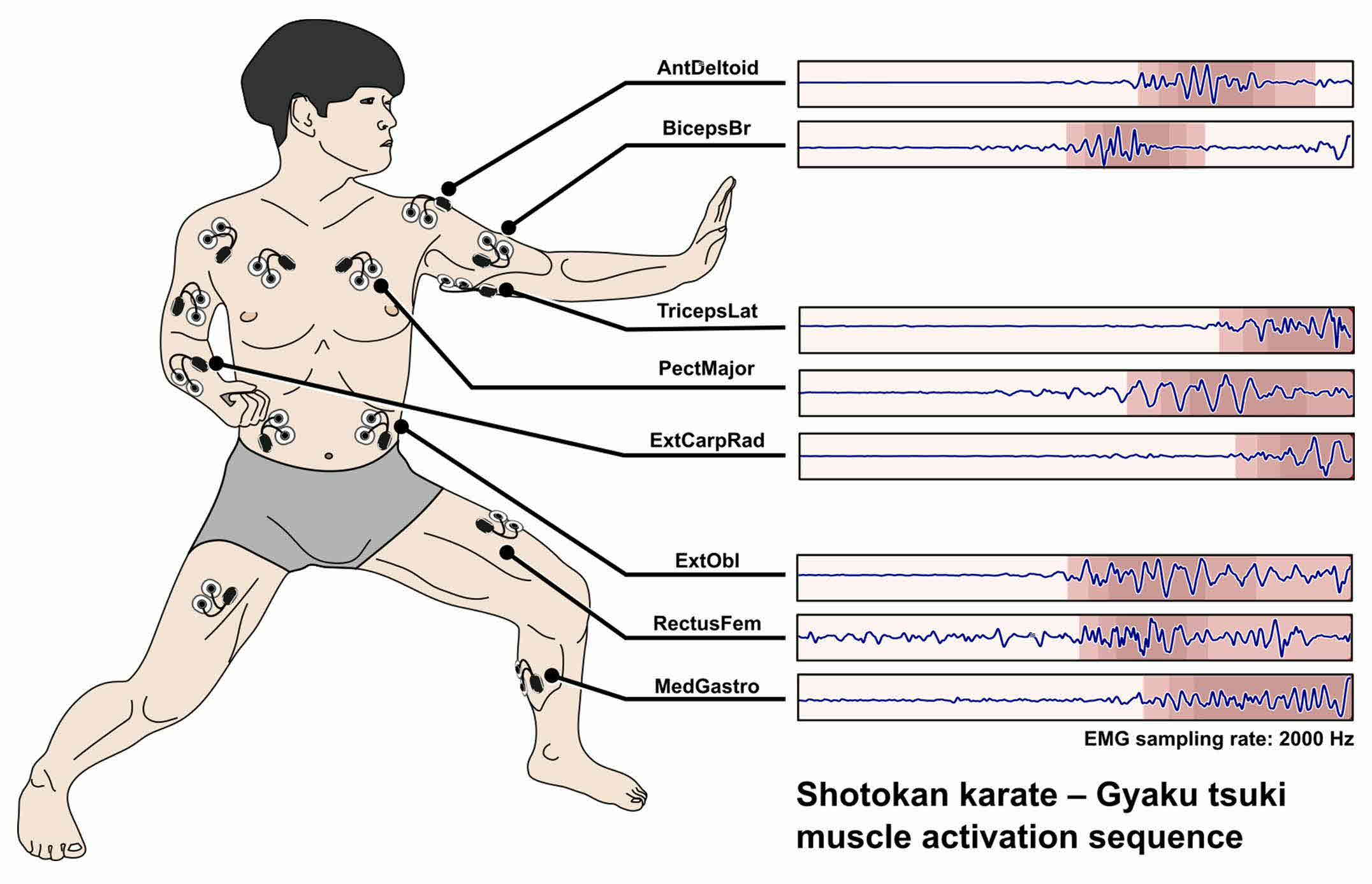
Background: This study aimed to develop a method to analyze the kinetic and kinematic characteristics of the traditional karate Gyaku Tsuki (reverse punch), focusing on the activation sequence of lower and upper extremities and trunk muscles during execution. Methods: An elite male (N = 1) karate athlete (in kata) performed 20 Gyaku Tsuki punches while equipped with 16 wireless surface EMG sensors integrated with 3-axis accelerometers. The five punches with the highest forearm acceleration were selected for analysis. EMG, accelerometer, and synchronized video data were recorded and processed. Results: A novel visualization technique was developed to represent muscle activation over time, distinguishing a spectrum of 0-25-50-75-100% activation levels. Muscle activation times for arm, leg, and trunk muscles ranged from -0.31 to -0.11 s relative to punch execution, indicating rapid, coordinated muscle engagement. Conclusions: This method enables detailed analysis of muscle activation patterns in karate punches. It offers valuable insights for biomechanics researchers and practical applications for coaches aiming to enhance performance and prevent injuries through better understanding of movement dynamics.
© Copyright 2025 Sports. MDPI. Alle Rechte vorbehalten.
| Schlagworte: | |
|---|---|
| Notationen: | Kampfsportarten Biowissenschaften und Sportmedizin |
| Tagging: | Kinematik Schlag |
| Veröffentlicht in: | Sports |
| Sprache: | Englisch |
| Veröffentlicht: |
2025
|
| Online-Zugang: | https://doi.org/10.3390/sports13070218 |
| Jahrgang: | 13 |
| Heft: | 7 |
| Seiten: | 218 |
| Dokumentenarten: | Artikel |
| Level: | hoch |