

Lower extremity stiffness: Considerations for testing, performance enhancement, and injury risk
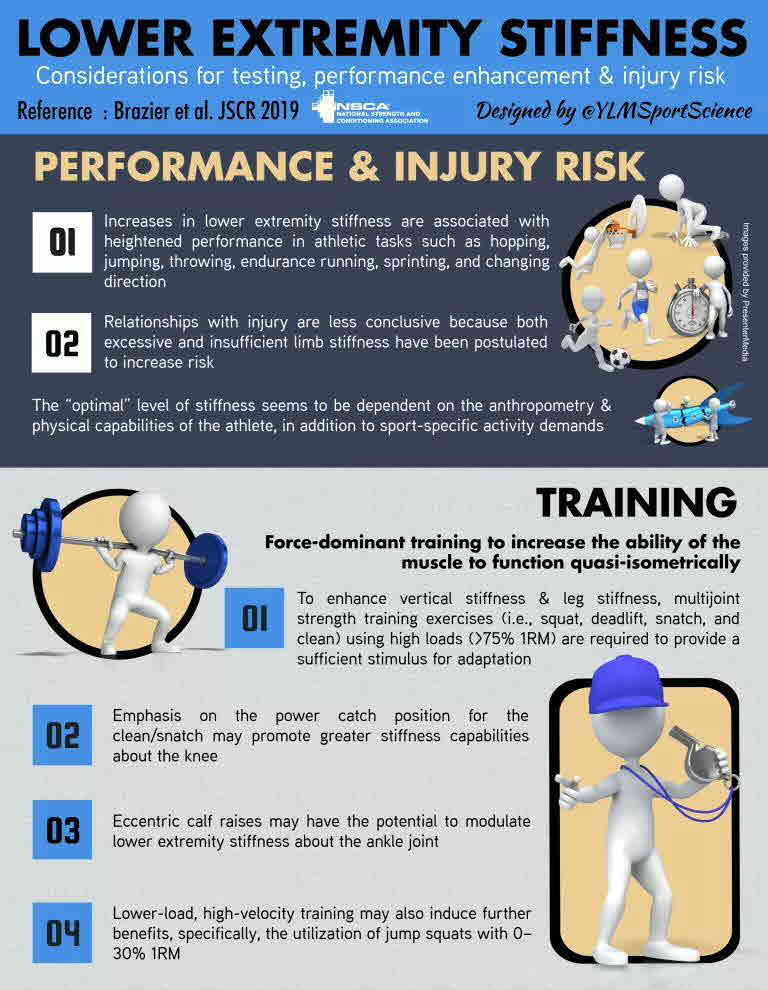
© Copyright 2019 YLMSportScience. All rights reserved.
The purpose of this study was to test the hypothesis that surfers would achieve a higher V[Combining Dot Above]O 2peak when tested in a swim flume vs. on a swimbench ergometer. Forty-eight surfers (male: 38, female: 10) aged 18-45 years participated in the study. Protocol 1 and 2 both measured heart rate, oxygen consumption (V[Combining Dot Above]O 2), and respiratory exchange ratio while subjects performed an incremental paddling test both on a swimbench ergometer and in a swim flume. Protocol 2 additionally measured muscle activity and changes in skin temperature. V[Combining Dot Above]O 2peak was significantly higher in the swim flume (33.03 ± 1.04 ml/kg·min) vs. on the swimbench ergometer (29.86 ± 1.08 ml/kg·min) ( pvalue < 0.001). There were also significant differences in muscle activation and changes in skin temperature between the flume and ergometer ( p-value < 0.05). Surfers significantly increased their V[Combining Dot Above]O 2peak in the water suggesting previous reports of V[Combining Dot Above]O 2peak likely underestimated surfer's aerobic fitness when measured on a swimbench ergometer. Future research investigating the aerobic fitness of surfers should be conducted while paddling in water or account for the 11% difference in V[Combining Dot Above]O 2peak when tested on a swimbench ergometer.
© Copyright 2019 The Journal of Strength and Conditioning Research. National Strength & Conditioning Association. All rights reserved.
| Subjects: | |
|---|---|
| Notations: | training science technical sports |
| Tagging: | Steifigkeit |
| Published in: | The Journal of Strength and Conditioning Research |
| Language: | English |
| Published: |
2019
|
| Online Access: | http://doi.org/10.1519/JSC.0000000000002283 |
| Volume: | 33 |
| Issue: | 4 |
| Pages: | 1095-1101 |
| Document types: | article |
| Level: | advanced |